Introduction
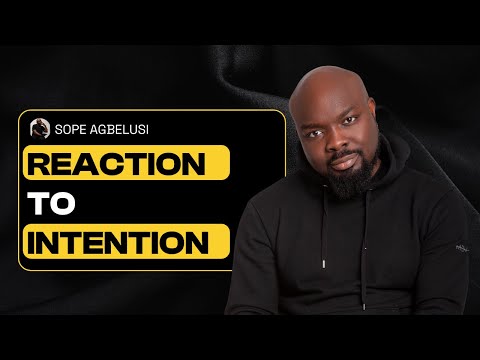
Sope Agbelusi spent his summer break in Nigeria, Colombia and Chicago, and one lesson kept resurfacing wherever he went: less is more. Returning to the podcast after that break, he makes the case directly to his audience of leaders and founders, that the world's instruction to do more, get more and be more is actively working against them, and that the more you add, the less you actually matter.
The lie that more equals productive
Sope opens with the core confusion he sees repeatedly in his coaching work: leaders mistake movement for accomplishment, filling a calendar without moving the needle on anything that matters. He explains the neuroscience behind why this feels so convincing: the brain releases dopamine every time a task gets ticked off, creating a sense of progress that has nothing to do with whether the right things are actually getting done. He quotes Warren Buffett's observation that the difference between successful people and really successful people is that really successful people say no to almost everything, and asks leaders directly where they're mistaking busyness for effectiveness.
The lie that more equals value, speed and resilience
Sope works through three more common assumptions and dismantles each with a specific example. More doesn't show your value, it dilutes how memorable you are, illustrated by Maya Angelou, who is remembered for a handful of books that changed the world rather than a large body of forgettable work. More doesn't keep you ahead, citing the African proverb that if you want to go fast, go alone, but if you want to go far, go together, arguing that chasing more usually means rushing alone toward burnout. And more doesn't build resilience: he points to Serena Williams stepping away from tennis to preserve her health for her family, arguing that stress isn't strength and burnout isn't resilience, less gave her longevity with the people who mattered most.
Great leaders cut: the case for subtraction
Sope's fifth lie is the belief that doing more is simply what great leaders do. He counters that great leaders cut, subtracting until only the essential remains, citing Steve Jobs' return to Apple, where he reportedly reduced a sprawling product line down to four products and refocused the company around them. He asks leaders directly what needs cutting from their own lives right now, what can be delegated, and what needs to be stopped entirely, noting how often his own clients are surprised to discover they were never actually required to attend a meeting or take on a task they'd simply never questioned.
Clarity and fewer decisions
Sope draws on Greg McKeown's concept of essentialism, the disciplined pursuit of less, framing it not as laziness but as a route to clarity: when the noise is cut, what actually matters gets louder. He shares a diagnostic exercise from his own coaching work: asking a leadership team what their top priority is for the quarter and finding that roughly seven times out of ten, people give different answers, evidence of a real communication and alignment gap most leaders don't realise exists. He connects this to decision fatigue, arguing that fewer choices lead to smarter choices, and that the best leaders automate or delegate the small decisions specifically so they have bandwidth for the significant ones.
Presence over volume
Sope argues that impact multiplies through weight rather than length, citing Chimamanda Ngozi Adichie's TED talk "The Danger of a Single Story", under 20 minutes long, as a piece of communication that shifted global conversations on culture and identity. He extends the same logic to presence itself, quoting Ecclesiastes 4:6 on the value of one handful with tranquility over two handfuls with toil, and arguing that leaders constantly rushing between commitments are never fully present in any of them. His challenge to leaders is direct: teams don't need you in every room, they need you fully present in the rooms you're actually in.
Stillness as where wisdom surfaces
Sope closes by describing stillness as a discipline he has returned to repeatedly across his career, running global teams, building his own business, and navigating difficult family situations, insisting that stillness was never weakness for him but the place where wisdom actually surfaced. He cites Psalm 46:10, "be still and know that I am God", and argues that the most important insights rarely announce themselves loudly, they whisper, and require slowing down to be heard at all. His closing challenge to listeners is simple: what is one thing you need to cut this week so that what truly matters has room to breathe.