Introduction
Grace Masuro found a lump during the first Covid lockdown and ignored it. Her mother and sister had both had cysts before, so she told herself it was probably nothing and carried on working from her desk. By the time she got it checked, the diagnosis landed on Christmas Eve 2020, cancer in both breasts. Two years earlier she had watched her father die of terminal cancer within a week of his own diagnosis. She had already survived a divorce before she turned 30, two years of postnatal depression, and a childhood spent learning English while being teased for the accent she hadn't yet lost. This is not a story about one hard season. It is a story about what happens when someone stops treating every hard season as something to get through alone, and starts asking what each one is trying to teach her.
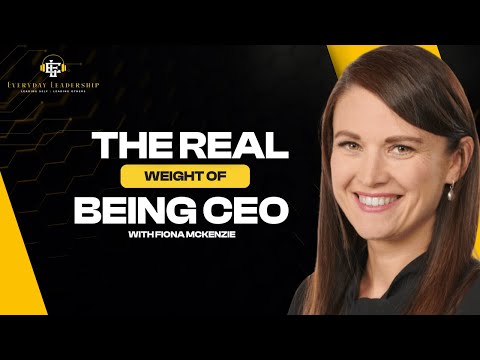
Speaking with Sope Agbelusi on Everyday Leadership, Grace Masuro, founder of an organisational inclusion consultancy and host of The Organisational Inclusionist podcast, traces the line from a five-year-old arriving in the UK from Nigeria, through a corporate recruitment career that nearly swallowed her whole, to a cancer diagnosis she says she is, strangely, grateful for.
Learning to disappear the accent, not the pain
Grace moved to the UK from Nigeria at five years old, unable to speak English. She was placed in a remedial class and teased for her accent once she did start speaking. By six or seven, she had learned the language well enough to be moved into general population at school, but the years before that left a mark. Her mother worked three jobs to support Grace and her sister while raising them largely alone, her father did not join them in the UK until years later. Grace and her sister were looked after by a nanny during the week and saw their mother only at weekends, and even then, if a conversation looked like it might upset her, they would stop talking about it.
"I think I learned from a very young age to protect other people's feelings, but also to handle things by myself," Grace says. That instinct, protect everyone else, say nothing about your own load, would follow her for the next three decades.
By secondary school, at The Grey Coat Hospital in Victoria \[CHECK: confirm exact school name and spelling\], the picture changed completely. Teachers advocated for her, developed what she was good at, and she thrived. It is the same school her daughter now attends.
The corporate machine and the manager who told her the truth
Grace planned to become a lawyer, in part because arguing came naturally to her and in part because, as she puts it, in a Nigerian household the expectation was accountant, doctor or lawyer. Missed grades at A-level took law off the table. She moved instead into a graduate scheme at a recruitment company, and threw herself into it completely: twelve-hour days, no social life, barely any time with the mother she describes as the love of her life.
Her line manager at the time, blunt, sweary, and by her account one of the best she ever had, told her plainly one day: "Grace, you're not a counsellor and you're not these people's friends. Stop caring about where they go and concentrate on getting them into work and getting your bonus."
She didn't like it. But it named something true, she cared more about the people she was placing than the placements themselves. At 22, in the same month she had hit her best targets ever, she handed in her resignation. Her manager cried. So did she.
Choosing the work that actually fit
After leaving recruitment, Grace was approached about a role supporting people on unemployment benefits into work. It was the same skill set, aimed at the outcome she actually cared about. "This is what will serve my spirit," she says she thought. She spent the following years moving through employability support, team leadership, stakeholder engagement on government contracts, and eventually leadership coaching for a startup, work she describes as the natural continuation of what that first manager had accidentally taught her: that her real driver was supporting people to become who they were capable of being.
Each move followed the same pattern. She would take a role, do it well, then notice the exact moment it stopped fulfilling her, most often when she lost the team around her or the direct human connection to the people she was helping. She kept moving toward the work that gave her both.
Four people in the room: the day everything changed
Grace found a lump in her right breast during the first lockdown and put off getting it checked, assuming it was a cyst like the ones her mother and sister had both had. When she finally called her GP during the second lockdown, she was seen that same afternoon, a signal in itself that the NHS was taking it seriously. A biopsy followed, then a second one after doctors spotted calcification in her other breast too, just to be safe.
The results appointment was booked for Christmas Eve. Grace took the date itself as reassurance: "My God and king is not going to give me bad news on Christmas Eve." She went in alone, having decided not to waste anyone's time bringing them along. She was made to wait twenty minutes, unusual for that clinic, and when she finally walked into the room, four people were waiting for her.
"There's too many of you in here for this to be good news," she said, hoping for a laugh. Nobody laughed. She was told she had breast cancer in both breasts.
Her first thought was her daughter, whose only frame of reference for cancer was that it had killed her grandfather two years earlier. Her second thought was her mother, whose health was already fragile, and her siblings, for whom Grace had become the responsible one since her father's death. She left the room, called her aunt, and cried and prayed for two days before telling anyone else in her family, timing it so it wouldn't overshadow Christmas with her daughter.
Learning to be "baby girl": vulnerability as strength
Grace went through the full course of treatment, chemotherapy, surgery, radiotherapy, and describes the experience as exhausting but never one she faced with dread. She had looked at the vision board she'd made in December, full of goals for the coming year, and decided the diagnosis was less an obstacle to those goals than a forced correction: "What you're putting me through now is necessary to take me to the next level."
What changed most wasn't her career, though that shifted too. It was her relationship to asking for help. For most of her life, Grace had been the one who poured into everyone else while insisting she was fine, a pattern she traces directly back to her mother's instinct that "what happens in this house doesn't leave this house." Being the one who never needed anything left her resentful, exhausted and lonely, because people only check on you when they think you might need checking on.
Cancer forced the shift. She started letting people in, calling it becoming comfortable being "baby girl", soft, vulnerable, willing to receive. She reframes the guilt often attached to needing help: she'd once heard that pure altruism is a myth, because helping someone else makes the helper feel good too. If that's true, she reasons, then refusing to let people help you isn't selflessness, it's denying them the same fulfilment you get from giving. "Now that they're able to help me, they feel a sense of fulfilment," she says. "It just feels good all around."
The cost of doing inclusion work in a hostile climate
Grace's diagnosis reshaped her career direction too. Mid-treatment, a consultant warned her that returning to the corporate world could be harder now that she was legally classed as disabled as a result of the cancer, one more characteristic she might feel pressure to hide on top of being a Black woman navigating corporate spaces that hadn't always made room for her progression. That conversation is part of why she built her own consultancy \[CHECK: confirm exact company name, transcript audio suggests "Acquaint Consulting", website appears as [acquaintconsulting.us](http://acquaintconsulting.us)\], supporting organisations to remove barriers for people from underrepresented backgrounds so nobody has to make that calculation.
The work is not abstract for her. She describes a heavy day following widely reported racist and misogynistic comments made about a Black female politician \[CHECK: transcript audio suggests this refers to Diane Abbott MP and a specific 2024 incident; confirm details before publishing\], saying she was mentally and physically exhausted by early afternoon before she even understood why. "It's still happening in 2024," she says. Days like that are also, in her telling, the clearest evidence for why the work matters.
Self-regulation is how she stays in the work without being consumed by it. She starts every day with a workout, builds in deliberate joy, a walk, a treat, an hour doing her nails, whatever fills her cup, and treats writing as a release valve for whatever she can't say out loud yet. She is candid that Black women in the UK often learn self-regulation early and out of necessity: "There isn't an option to be an expressive angry Black woman, so we learn to self-regulate very, very early."
What failure and leadership look like now
Asked how she handles failure at 39, with a divorce, postnatal depression, her father's death and cancer behind her, Grace points to a tattoo: never regret, always a lesson. She doesn't claim to enjoy failure, but treats every one as material for growth rather than evidence she's finished.
Her definition of leadership follows the same thread that runs through the whole conversation, from the manager who told her the truth about her own priorities, to the mentor who found her a role when she felt stuck, to the consultant who made her think harder about disclosure and disability. "True leadership is seeing your people as people, appreciating that their needs and wants matter, and supporting them to achieve those needs and wants," she says. "Sometimes we confuse management with leadership." Managing gets a job done. Leading asks what the person doing it actually wants for themselves, and helps them get there.