Introduction
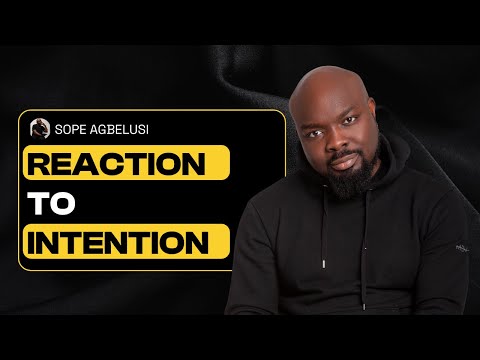
Someone recently told Sope Agbelusi he was lucky. Lucky to travel the world, lucky to have great relationships, lucky to be living the life he's living. Internally, he was vexed. Not because the comment was unkind, but because it erased every choice that built that life. Nothing about it was luck. It was the result of decisions made and remade over twenty years, many of them uncomfortable, some of them costly.
That moment is the starting point for this episode of Everyday Leadership. What follows is not a highlight reel. It is an honest account of what it actually takes to live a life you have designed on purpose, instead of one that happened to you by default.
The Question That Exposed the Myth of Luck
When someone asks how you got so lucky, they are usually looking at the outcome and skipping the years of choices underneath it. Sope's reaction to being called lucky was immediate: lucky, are you kidding me? The life he is living right now is a life he intentionally worked for, every single day.
Every day, we make hundreds of thousands of choices. Most feel insignificant in the moment. But those choices compound, and they push us in one of two directions: toward a life that has been intentionally designed, or toward a life we are simply reacting to. There is no third option.
What Intentional Living Actually Means
People hear "intentional living" and picture something simple, almost mathematical, one plus one equals two. It isn't that. Living a life of intentionality means making conscious choices that align with your core values, your goals and your aspirations, rather than merely reacting to circumstances or following society's expectations without question.
Sope calls it living from the inside in, not the outside out. It is about knowing what you do, why you do it, and continually making decisions that steer your life in a particular direction. As the quote often attributed to Henry David Thoreau puts it, the price of anything is the amount of life you exchange for it. While you are still here breathing, you are exchanging your time, your life, for something. The only question that matters is whether that something was designed by you, or designed for you by other people.
The Flywheel Behind Every Choice
Sope works from a simple flywheel with his clients: mindset impacts values, values impact behaviour, behaviour impacts actions, and actions loop back into mindset. It doesn't always move in that exact order, but it has shaped how he has lived for the best part of thirty years.
To put that flywheel into practice, he uses a framework in his business called the DECIDE framework: Define, Evaluate, Consider, Implement, Dedicate, and Evaluate again. Evaluate appears twice on purpose. Intentional living runs on experimentation, and experimentation means checking constantly whether something is still working for you, not just whether it worked once.
The Client Who Sat in Silence for Five Minutes
Sope worked with a client who had spent eighteen years at one of the top tech firms in the world, risen to a senior level, and was earning serious money. The question on the table was simple: what comes next, stay and retire, or step into something new?
Sope asked him a harder question. Not the first answer that comes to mind, but the thing he'd always wanted to do and been too scared to say out loud, even to himself. The client paused. They sat in silence for about five minutes. Then he shared it, and as he did, he trembled. He said that apart from his wife, he had never told anyone else, because it seemed so far removed from who he was and what he did. Every year, for the last ten years, something reminded him of it \[CHECK: nature of the recurring "reminder" is not specified in the transcript\].
They explored what it would actually take. They evaluated the implications: the circle he was currently in might not follow him into this new version of his life, he might lose friends in the process. Sope asked directly, do you still want to go ahead? He said yes. The more they explored and evaluated, the more energy the client found, energy he hadn't felt in a long time. That, Sope says, is the body telling you the thing you thought was impossible might just be fear that has been holding you back.
Within fourteen to fifteen months, a man who had spent eighteen years in tech had moved into a completely different industry and started a not-for-profit with his wife. Two things he'd always thought were impossible, done.
Unlearn, Unlock, Unleash: Why Intentional Living Isn't Easy
This is the same pattern behind the 3U Framework Sope uses in his work with organisations: Unlearn, Unlock, Unleash. Unlearning means letting go of fears, behaviours, values and mindsets that no longer serve you. Letting go creates space for what unlocks next, because Sope believes every person already carries gifts and talents inside them that simply need unlocking. What has been unlearned and unlocked can then be unleashed into your life.
None of this happens quickly. The client who changed industries took six to nine months just to unlearn certain behaviours and push past specific fears. It took conversations with his wife, and with friends, to help him reposition how he thought about his own life. Working with a coach can help, but the change itself is not something anyone else can do for you.
Sope's own twenty-year journey proves the same point. A diary entry from two decades ago said he wanted to work internationally, travel the world, run projects that excited him, and change the hearts and lives of people. Since then: a chartered accountancy background \[CHECK: transcript audio is unclear on this phrase\], consultancy, project management, running a previous company, raising two kids, and a marriage he describes as amazing, though not flawless. None of it arrived in a straight line. There were hurdles, pitfalls, and parts of himself that needed to be pruned or chipped away. He wouldn't change the path, even the parts that cost him, including his hair.
Habit Versus Intent, and Why It Shows Up in Marriage First
For close to a decade, Sope has woken up on a Monday and been happy. In the decade before that, he was happy until he reached the gates of the organisation he worked for. He won't name it. He had migraines that only lifted once he left at half past five. He calls them the migraine years, the Monday Blue Morning years. He lived through them while already holding an intentional life philosophy on paper. Believing in intentional living and practising it under pressure are two different things.
That is where a phrase he keeps returning to comes in: leave less out of habit and more out of intent. Habit feels safe because it's familiar, it's what you already know, and it's easy to fall back into, even when it's a bad habit or a bad crowd. Intent is riskier. Intent is experimental, it invites failure, it demands patience and a growth mindset. Habit can keep you in fear. Intent moves you from where you're at to where you actually want to be.
Sope's marriage is where he says this shows up most clearly. Before he and his wife got together, he already knew who he was and the kind of person he needed in his life. Once married, they asked each other what kind of marriage they wanted, what kind of role models they wanted to be for their children, and what each of them wanted to achieve in their careers. Along the way came hard conversations, about money, timing, parenting, and moments when either of them acted up. An intentional marriage meant learning to resolve conflict without hurting each other, without weaponising money, without dragging up something from five years ago, and learning to genuinely forgive rather than hold a grudge. It was never flawless. The intention was simply strong enough to keep showing up. Getting that right in his marriage, Sope says, made it far easier to bring the same intentionality into his career.
Five Questions to Ask Yourself
Sope closes the episode with five questions worth sitting with rather than answering quickly:
1. What are your core values, and how do they guide your decisions at work and in your personal life?
2. Can you describe a recent decision where you felt fully aligned with your intentions? What made that alignment possible?
3. What long-term goals are you currently pursuing, and how do they reflect your personal and professional aspirations?
4. What daily habits support your intention to live and lead effectively, and are there habits that detract from it?
5. How do you handle situations where your personal values conflict with your professional demands?
Intentional living does not happen by chance or by accident. It happens through the choices you make, if you choose to make them. For a lot of people, life simply happens to them instead. Sope has worked with clients who have years of experience and plenty of money, yet despite that success, life has happened to them and they are not fulfilled. The clients who do the work end up living differently. They describe joy that comes from the inside and can't be shaken, rather than happiness that is external and can be taken away easily.