Introduction
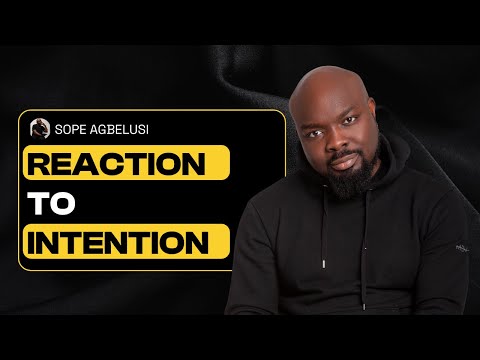
Sope Agbelusi has taken serious hits this year, and none of them were his fault. Clients paused. Projects pulled. Opportunities that looked locked in disappeared because of decisions made in rooms he will never sit in. This episode is about the mindset he had to return to when fairness stopped being available: no one owes you anything, and that turns out to be the more useful truth.
When the world's problems become your P&L
Sope opens with the blunt reality of running a business in a hyperconnected world where geopolitical shifts that should have nothing to do with a small organisation end up deciding its fate anyway: clients paused, projects pulled, opportunities gone. He names a second, parallel layer, the rollback of DEI programmes across major companies including PepsiCo, Meta, Amazon and Google, which he says has pushed brilliant, qualified, values-driven people out of roles not because they couldn't deliver, but because their presence became politically inconvenient. A third layer sits on top of both: stock market volatility that has hit people who believed they were insulated, pensions, index funds, university savings, proving that no one is fully protected from forces outside their control.
The mindset shift: "no one owes you anything"
Against that backdrop, Sope returns to a single statement he says he has had to revisit recently: no one owes you anything. Not the government, not the market, not the boardrooms, not the algorithm, not a shot, not a seat, not the spotlight. He's explicit that the statement is painful, not comforting, but argues it is the more powerful mindset precisely because it stops you waiting for fairness that isn't coming and puts the responsibility for what happens next back in your own hands.
The neuroscience of ownership
Sope grounds the shift in neuroscience: taking ownership of your circumstances activates the prefrontal cortex, the part of the brain responsible for planning, decision-making and emotional regulation, restoring a sense of agency rather than leaving you feeling like a pawn in someone else's game. He cites a Daniel Pink line he encountered while teaching an executive cohort in New York, that control leads to compliance while autonomy leads to engagement, and pairs it with a line from a researcher he credits as Dr Amen Zala \[CHECK\]: accountability is about ownership, and leaders who cultivate trust inspire their teams to take responsibility and perform at their best. His point is sequential: you cannot lead other people until you can lead yourself, and leading yourself starts with accountability even when the situation genuinely isn't your fault.
A deal that took eleven months to fall apart
Sope shares a personal example from MindsetShift's early days: 10 to 11 months of back and forth with an organisation, a verbal promise that the paperwork was coming and the budget was locked in, and personal and business plans built around that deal landing, including hiring two more people. The contact had, in fact, been planning to leave the organisation for nine of those eleven months, had already briefed their successor, and never told Sope any of it. He only found out the deal was dead three months later, through a third party, after his emails to the new contact went unanswered. He's candid that an older, angrier version of himself wanted to react very differently, and that returning to "no one owes me anything" was what let him process the situation without letting bitterness take over.
What you owe yourself instead
Sope reframes the statement's flip side: if no one owes you anything, you owe yourself everything, to keep building, speaking, serving, resting and rising. He extends that obligation outward too, to model resilience for your children and to show your community that setbacks don't define you, your response to them does. He's honest that believing excellence alone would be enough was a lesson he learned the hard way early in his career, and says the answer isn't to stop being excellent, but to double down, while actually feeling and naming the pain and frustration rather than suppressing it.
Finding your anchor
Sope closes by naming his own anchor, faith and family, and by explicitly rejecting the market, the metrics and titles as substitutes for it. His argument is that change is the only constant, so an anchor built on anything external will eventually be tested and found wanting. The only asset no one can take from you, in his framing, is yourself: your values, your gifts, your mindset.