Introduction
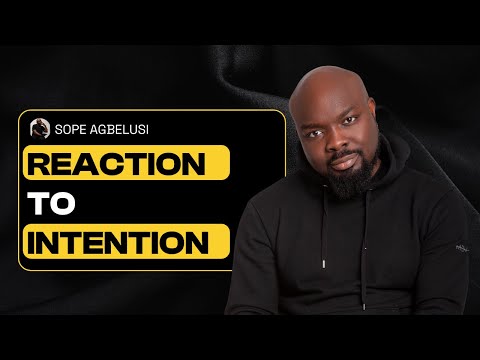
Sope Agbelusi once had a clear picture of success: rise through corporate, director to VP to CFO to the C-suite. Then a conversation with his son flipped that entire plan upside down. This episode is about what happens after that moment, when you're forced to ask a question most people never slow down enough to answer: what does success actually feel like to me, not what it's supposed to look like on paper.
The conversation that flipped his path upside down
Sope describes working in corporate years ago with a defined trajectory in mind, climbing steadily toward the C-suite. A conversation with his son changed that entirely, prompting him to walk away from that prescribed path and build something different instead. He's candid that the decision wasn't easy, but frames it as the moment he stopped pursuing a version of success that had been set for him by the expectations around him and started building one of his own.
Why fear of success holds people back more than fear of failure
Sope argues that fear of failure gets most of the attention, but fear of success is often the real obstacle. He breaks it into specific fears: the fear of who you'll have to become, of being fully seen, of being expected to keep delivering, of being judged at a higher level, of being misunderstood. He adds a more personal one, the fear of losing friends who don't grow alongside you, noting bluntly that building new friendships gets harder with age. Increased visibility also means increased exposure to criticism and mistakes, and growing expectations that you'll never drop the ball, all of which can quietly keep people stuck exactly where they are.
The added layer: conditioning to play small
Speaking specifically from his own experience as a Black man and a proud Nigerian, Sope names an additional layer many Black professionals raised in the West carry: being taught, subtly and not so subtly, to feel grateful just to be in the room, to not be too loud, to not ask for too much, to shrink to fit spaces that weren't built with them in mind, and to treat sitting just beneath the glass ceiling as progress. Against that, he places a Nigerian phrase: Naija never carries last, meaning a refusal to apologise for dreaming big or taking up space. His argument is that when people have been conditioned to associate success with risk, rejection, outgrowing what's familiar, being first with no one to follow, that association isn't ego, it's conditioning, and it has to be actively unlearned.
Three ways to move through the fear
Sope offers a practical sequence. First, redefine success as alignment rather than volume, busyness or being impressive, so your brand becomes something sustainable you can actually sustain rather than a performance. Second, name specifically what you're afraid to lose if you succeed, who you're scared of leaving behind, what pressure you doubt you can handle, arguing that fear loses power once it's named rather than left vague. Third, create safety around your next level by rehearsing success emotionally: visualising it, speaking about it out loud, and normalising it within your inner circle, since the nervous system resists the unfamiliar even when it's good for you.
Redefining success as alignment
For Sope personally, success isn't about being busy or fully booked, it's about alignment, peace, purpose and presence, building a business that reflects who he is rather than only what he can do, and having impact without needing to perform for it. He's explicit that everyone's version will differ, and that the point isn't to copy his definition but to build your own, from the inside out rather than from public expectation inward.