Introduction
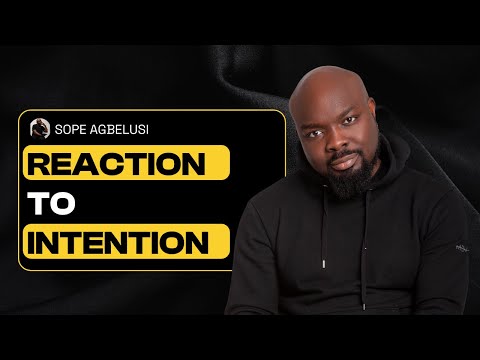
For ninety-nine episodes, Sope Agbelusi has been the one asking the questions. For episode 100, his wife Shireen Agbelusi takes the host seat and turns the microphone on him. What follows is not a highlight reel. Sope talks about quitting a secure, well-paid corporate career on what he describes as a direct prompt from God, the marriage lessons that shaped how he leads teams twenty years his senior, and the word that frustrates him more than almost anything else he encounters in his work. It is Everyday Leadership's founder, unfiltered, without the questions prepared in advance.
Defining himself: leading from the inside out
Asked to summarise who he is, Sope reaches for the phrase that anchors everything else in the conversation: he leads from the inside out, not the outside in. He applies it to every role he holds, as a husband, a father of two, an executive coach and the founder of MindsetShift. Growing up in the UK as a Black man with what he calls a name teachers struggled to pronounce from his first day at school, he learned early that it is easy to let other people's opinions, assumptions and low expectations define you. Leading from the inside out means anchoring identity in what he believes God has put inside him instead.
What marriage and fatherhood taught him about leadership
Sope credits his marriage, twenty-plus years in, with teaching him some of his most transferable leadership lessons. Chief among them is communication: learning not to go on the defensive when his wife tells him something he does not want to hear, and instead taking the harder walk of seeing a situation from someone else's perspective. He describes marriage as requiring both partners to continually reintroduce themselves to each other, since the person he married is not the person he is now, and says he applies that same intentionality to the people he leads professionally, which is part of why he has been able to lead team members ten, fifteen, twenty years older than himself.
Fatherhood added a lesson that ran against how he was raised. Growing up in a Nigerian household, apologising to your children was not the norm. He has had to learn to do it anyway, along with not dismissing his children's ideas and allowing his own views to be challenged by people who love him, a muscle that makes him far less rattled when his thinking is challenged in a professional setting.
Faith as the foundation, even when it stays unspoken
Sope does not typically discuss his Christian faith directly with coaching clients. What he brings instead is the posture faith gives him: openness, and a refusal to judge or scrutinise the people he is working with. He points out that many of the frameworks used by large consultancies have roots in biblical principles, even when they are never named as such. For him, showing up as a coach and challenging people's thinking is, in itself, an expression of obedience to what he believes he has been called to do.
The decision to leave corporate
The clearest example of faith shaping his career came in two stages. Early on, during a financially tight period, he says he heard God tell him to have a second child despite a long list of financial conditions he felt needed to be met first. Within months, both the child and the conditions arrived. \[CHECK: the specific description of this financial threshold, referencing being "a level below poor" and only able to afford certain items, is unclear in the transcript and may contain an ASR transcription error.\]
Years later, with a ten-year plan to leave corporate finance around age thirty-eight already mapped out, he says he felt God tell him the timeline needed to move up. He describes the conversation with his wife about quitting as one of the hardest of his life, and turning down a significant counter-offer, delivered in person by a finance director who flew in from the US, as one of the most tempting things he has had to say no to. He built his first company from that decision, which he says grew to generate substantial revenue for the organisations he worked with over the following years. \[CHECK: the specific revenue figure given, described by Sope himself as an estimate, should be verified before publishing.\] He is clear that stepping into founding MindsetShift was not just his own leap: it also freed his wife to step into her own purpose, something he says was always the intention rather than a side effect.
What sets his coaching apart
Sope traces his coaching approach to a combination most coaches do not have: a corporate finance background as a chartered accountant, a stint building software, and later founding and running his own company. His method with leaders, he says, is consistent: take people out of their current environment, give them space to reflect, help them find clarity, and only then move to authentic action. He is candid that his edge is authenticity rather than technique. He knows the models other coaches use, but says what differentiates him is refusing to hide behind them, choosing instead to lean into twenty-five years of accumulated experience across very different worlds.
Getting out of the box others put you in
Asked what he tells people who feel boxed in, Sope offers a simple diagnostic: work out who holds the key. If the box was built by other people's opinions, that is worth interrogating for any grain of truth before deciding whether to use it or discard it entirely. If the box is built from your own internal messaging, shaped by what you consume on social media or who you spend time with, then you hold the key yourself. Either way, his instruction is the same: do not stay in it.
A self-leadership routine built on quiet
Sope's own routine starts early: a devotional, quiet time with God before the noise of the day arrives, followed by exercise, usually running, though a recent injury has shifted this to cycling on a Peloton. He is direct that the value is not the exercise itself but the uninterrupted hour of listening to his own inner voice before the world gets a say. He records many of his videos straight after this hour, crediting the clarity that comes from that quiet more than any burst of post-exercise energy. He is honest that the days he skips it, he feels the effects physically and mentally.
The AGM: thirteen years of the same friendship group
For thirteen years, Sope has met annually with a group of male friends from university, now scattered across Ghana, the UK and the US. He calls it their AGM, and describes it as a space with no ego, no comparison and no judgement, where the group can respectfully disagree, challenge each other, and talk honestly about marriage and parenting. What began as meeting in each other's houses has evolved into trips that now require flights, which he frames as evidence of the group's own growth rather than simple logistics.
Stepping outside his comfort zone
Being interviewed for this episode was itself, Sope says, a step outside his comfort zone, since he is usually the one asking the questions. Professionally, he says he is regularly asked into unfamiliar organisations and teams to turn around failing projects, with genuine reputational risk attached each time. His current personal comfort-zone stretch is training for a charity cycling challenge covering fifty to seventy-five miles a day for over a week, despite not having ridden a bike properly in twenty years, a follow-up to a charity boxing match he took on a few years earlier in front of his family and colleagues.
What frustrates him: change management and the word "woke"
Sope names two recurring frustrations in his work. The first is how badly organisations handle change management, repeating the same communication mistakes through reorganisation after reorganisation, and how slowly "global companies" have actually adapted their ways of working for genuinely distributed, cross-timezone teams since the pandemic.
The second runs deeper. He is frustrated by the mainstream co-opting of the word "woke," a term he says originated as a warning to Black people to stay alert to racism and injustice, now stripped of that meaning and used dismissively by outlets and leaders far removed from its origin. For Sope, the shift in meaning is not a minor language quibble but a loss of a word that once served a real protective purpose.
What excites him about the next generation
On the other side of that frustration, Sope is genuinely encouraged by younger people's willingness to research an employer's actual values before accepting a role, and by what he sees as a more connected, less racially divided generation coming up behind him. He also highlights a number of friends building businesses in underfunded spaces, from angel investing aimed at Black communities to brand storytelling and men's mental health writing, as proof of what is possible even against difficult funding realities for Black-owned businesses. \[CHECK: the specific funding statistics cited for Black-owned businesses, and several of the names and business details mentioned in this section, are not fully clear in the transcript and should be verified before publishing.\]