Introduction
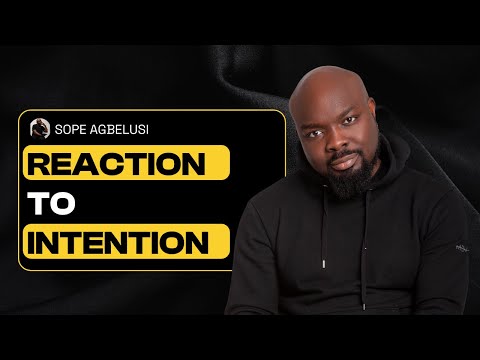
Most advice about levelling up tells you to add something: a habit, a skill, a network, a qualification. Sope Agbelusi makes the opposite case. In this episode he argues that going from good to great is far more often about what you're willing to remove, and he backs it with his own decision, six years ago, to shut down a profitable consultancy at the exact moment it was making him the most money it ever had.
That decision sits at the centre of a simple framework he calls GREAT, a five-question filter for working out what's actually taking you somewhere versus what's just familiar. He also shares the story of how Twitter was born from a company willing to let go of the business it thought it was building, and works through a real client example of a senior leader too scared to admit what they actually wanted.
The sandbags in the hot air balloon
Sope opens with something that happened on a family trip to Morocco. Each year, he and his wife take time away to reflect on the year gone and set direction for the one ahead. This year, they went further and took a sunrise hot air balloon ride, something his wife, who has a fear of heights, agreed to despite her nerves.
Watching the crew shed sandbags to let the balloon climb higher gave Sope the image that anchors this whole episode. To go higher, you have to let go of weight, and the sandbags worth cutting aren't always the obviously bad ones. Sometimes they're things going genuinely well. They just aren't taking you where you actually want to go.
The GREAT framework
Sope introduces a five-part filter he uses with paying coaching clients, offered here for free: GREAT. Growth asks whether something contributes to your personal or professional growth. Relevance asks whether it's still relevant to your current goals and future aspirations. Excess asks whether it's simply more than you need. Alignment asks whether it fits your values and the vision you have for your life. Thriving, the question he says catches people out every time, asks directly whether holding on to this is preventing you from thriving.
The framework isn't complicated by design. Its value is in actually sitting down and answering the five questions honestly about a specific relationship, habit, job or commitment, rather than treating it as background noise.
Applying it to his own consultancy
Sope walks through how he used GREAT on himself. After leaving corporate life, he'd built a consultancy running turnaround projects for large organisations, work that was financially rewarding and genuinely enjoyable, including late-night conversations with a Fortune 500 CEO about family and ambition that had real impact. But when he ran it through the framework, the answers were clear. It supported his personal financial growth, but not his professional growth toward what he'd actually left corporate to do, coach senior leaders directly and transform teams from the inside. It wasn't relevant to where he wanted to go. The long hours, spanning teams across multiple countries, were excess he could do without. It didn't align with the life he wanted to model for his children. And yes, holding on to it was preventing him from thriving.
He made the decision to close the consultancy and go all in on coaching during the uncertainty of the Covid lockdown, at a time when the business was still making good money and when the online space felt saturated with people offering advice. He credits the clarity from having already run the GREAT framework with giving him the conviction to act despite the noise.
How Twitter came from an empty space
To make the case that subtraction creates room for genuine innovation, Sope tells the story of Odeo \[CHECK: transcript renders the company name as "audio"; the real company, per publicly documented tech history, was Odeo\], a platform for finding and subscribing to podcasts in the early days of podcasting. When Apple announced iTunes would include a built-in podcasting platform, Odeo's entire business model was suddenly at risk.
Rather than trying to out-resource Apple, the team let go of their original business model and used the empty space that created to brainstorm something new. That process led to a micro-blogging concept built around short text messages, radically different from their original focus. That concept became Twitter. Sope's point isn't the platform itself, it's that the breakthrough only became possible once the team stopped defending what they'd built and let it go.
Why letting go takes courage, not certainty
Sope returns often to the image of a sculptor working marble: the art isn't only in what's added, it's in what's deliberately removed, one careful cut at a time, trusting that the shape will emerge. He's clear that this requires courage rather than certainty. It's easier to hold on to what's familiar, even when it isn't serving you, than to step into the unknown of an empty space.
He illustrates this with an anonymised client story: a senior leader, 24 years into one organisation and sitting in the C-suite, who came to him newly and uncharacteristically frustrated by things at work they'd normally shrug off. Working through the framework together, it became clear the frustration wasn't really about the organisation. It was about the leader wanting to step into something different and being too scared to admit it, so their mind and body were finding other things to be angry about instead.
Practical steps for stepping into the empty space
Sope offers a short practical sequence for anyone convinced by the argument but unsure how to act on it. Acknowledge the fear first, rather than pretending it isn't there, since naming it is the first step to managing it. Visualise the outcome in specific detail: what would your days, weeks and months actually look like once the change has happened. Start small, with one deliberate subtraction, whether that's decluttering a workspace, stepping back from a social commitment, or letting go of a board role, since small wins build the confidence needed for the larger ones. And seek support, whether from family, friends, mentors or a coach, rather than trying to navigate the decision entirely alone.