Introduction
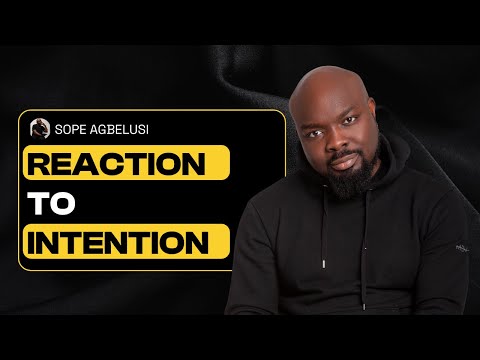
Some of the highest performers in any room are quietly running on empty, and nobody claps for that, because on paper they're still winning. Sope Agbelusi built a business through a period like this himself, doubling down on hours and effort while sleep became optional. What he learned the hard way is the argument of this episode: rest isn't the reward for good work, it's the condition that makes good work possible.
Burnout doesn't always look like exhaustion
Sope opens with a distinction he says nobody talks about enough: burnout doesn't always present as visible tiredness. Often it looks like excellence with a hidden cost, someone still performing, still delivering, still winning by every external measure, while a quiet collapse happens underneath that no one sees or applauds. He locates this pattern in his own recent history, a period when clients were vanishing and cash flow was tightening, and his instinctive response, like most leaders under pressure, was to double down: longer hours, more yeses, less sleep, on the belief that enough effort would turn things around. What he learned instead is that producing from depletion isn't creation, it's recycling whatever is left of you, and it isn't sustainable emotionally, mentally or creatively.
The science of stillness
Sope grounds the case for rest in the brain's default mode network, the part of the brain responsible for long-term decision-making, emotional regulation, big-picture thinking and creative insight, which only activates when the brain isn't actively scrolling, reacting or problem-solving. He points to the familiar experience of a solution arriving in the shower or on a dog walk, not through effort but through stillness, as that network doing exactly what it's built for. His argument is that modern habits, reaching for a phone the instant there's a quiet moment, filling every gap with music or notifications, are quietly blocking the very breakthroughs people are working so hard to force.
Protecting rest like a business asset
Sope points to Bill Gates' annual "Think Week", a period of total withdrawal for reading and reflection with no distractions, as an example of rest treated as a serious strategic asset rather than a luxury, noting that many of Gates' most significant decisions reportedly emerged from that silence rather than the boardroom. He also references Tricia Hersey, founder of The Nap Ministry, and her framing of rest as a form of resistance, particularly for people, Black women especially, whose existence has been tied to constant performance. Her core claim, that people are worthy of rest simply because they exist rather than because they've earned it, is one Sope calls genuinely confronting for founders who treat stopping as the enemy of progress.
The founder who hadn't taken a weekend off in 14 months
Sope shares the story of a client, a founder who had built a multi-billion pound business in under four years and looked, from the outside, like she was thriving. Behind the scenes, she had taken a full weekend off only once in roughly 14 months. When she finally paused for 48 hours, something shifted: she cried, journaled, and heard herself think clearly again. Out of that stillness came a decision to pivot her business, a renewed connection with her husband, and a new narrative that ultimately helped her secure a fresh round of funding. Sope's point is specific: the breakthrough came from resting with intention, not from working harder.
Rest as a leadership model, not a reward
Sope closes by reframing rest explicitly as strategy: not something you earn after the work is done, but the reason the work gets done well in the first place. He argues that when leaders visibly model rest, they give their teams permission to do the same, normalise boundaries, and stop treating burnout as a badge of honour. He connects this to his Christian faith, noting that rest was modelled from the very start of creation, on the seventh day, and asks directly what makes anyone exempt from that same pattern. He closes the episode by announcing his own month-long break from the podcast that year, framing it not as absence but as a deliberate pause so he can return, in his words, fuller and clearer rather than frantic.