Introduction
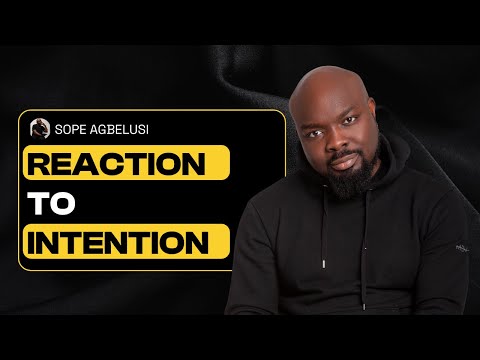
So many of Sope Agbelusi's recent conversations have circled back to the same feeling: people going through the motions, waking up to what feels like the same day on repeat, existing rather than living. That feeling has a name, powerlessness, and it tends to show up hardest when the world outside feels least stable. In this solo episode, Sope steps away from the usual interview format to argue that the antidote isn't waiting for circumstances to calm down. It's deciding, deliberately, how you show up inside them.
The powerlessness so many people are naming right now
Sope opens by naming the moment plainly. Climate anxiety, economic disparity, political instability, a revolving door of prime ministers, a cost of living crisis, layoffs, the shift to hybrid and remote work. Nothing about the current landscape feels fixed, and that constant movement creates what he calls a void. Once you think you've got something figured out, something shifts underneath you again.
His point isn't that this instability is imagined or exaggerated. He's explicit that he has lived through redundancy himself, arriving at work one day to be let go with no severance pay. What he pushes back on is the conclusion people draw from that instability, that they have no control at all. The circumstances are real. The powerlessness is optional.
Living from the inside out
The core reframe Sope offers is a phrase he returns to throughout: living from the inside out rather than outside in. When your sense of stability depends on external conditions, the job market, the news cycle, other people's decisions, it will always feel shaky, because none of those things are fixed. Your gifts, your talents, your experience and your values are the one part of the equation that cannot be taken away from you, regardless of what changes around you.
The problem, as he sees it, is that most people lean into the external far more than the internal. That imbalance is precisely why uncertainty feels so destabilising. You've built your sense of control on the part of your life that was never actually yours to control.
The rudderless ship
Sope's central image for the episode is a ship at sea. Live without intention and you are a ship without a rudder, entirely at the mercy of wind and waves, unable to steer toward anything because there is nothing to steer with. Live with intention and you have a rudder. You don't get a fixed, guaranteed map, the waves are still there, conditions still shift, but you can adjust your sails, choose your direction, and correct course as circumstances change.
The distinction matters because it reframes intention as an ongoing act of steering, not a single decision made once. You don't set your rudder and walk away. You keep adjusting it against what the day actually brings.
The parable of the moaning dog
To illustrate how many people relate to their own dissatisfaction, Sope tells a short parable about a man who kept walking past a house where a dog moaned constantly. When he finally asked the owners why, they explained the dog was lying on a nail. Asked why they didn't just move the dog, they said they had, many times, but the dog kept returning to the same spot to keep moaning.
The parable lands as a mirror. Plenty of people are, in effect, choosing to keep lying on the nail: naming the same complaint about a job, a relationship or a situation for years without taking the action that would actually resolve it. Sope contrasts this with a colleague from earlier in his career who talked for six years about wanting to retrain as an accountant and never moved, while he made the change himself within a year of deciding to.
Question one: do your daily actions align with your values
The first of Sope's three reflection questions asks whether your daily behaviour actually matches your stated goals and values, or whether it quietly contradicts them. He illustrates this with his own story of moving back home during a recession after a stretch working away from his family. He didn't just want any job that would get him home. He wrote down a short list of non-negotiables, including study leave for a professional qualification and a commute under ten miles, and held to it even though the job market was brutal at the time.
He's careful to note this isn't a claim that setting an intention guarantees the outcome. He found a role that matched nearly everything on his list, and he's candid that faith and circumstance played a part too. But holding the criteria in the first place is what gave him something to negotiate for, rather than simply accepting whatever came along.
Question two: are you choosing or merely reacting
The second question asks whether you're proactively shaping your life through conscious decisions, or passively reacting to whatever happens to you. Sope shares the story of a coaching client who was competent in her role, had been there for years, and was quietly miserable, without being able to name why. He asked her to write down what a perfect day, week and month would actually look like.
The exercise gave her something to move toward instead of only something to escape. When she eventually changed roles, she knew precisely what she was moving into and why, which kept her motivated through the transition in a way that simply escaping a bad situation wouldn't have. Sope points out that hiring a coach in the first place was itself a conscious choice, even before any of the bigger decisions that followed. People often don't credit themselves for those smaller, quieter acts of agency.
Question three: are you present or just going through the motions
The final question asks whether you're actually engaged in your daily life, or running on autopilot: same routine, same responses, nothing landing. Sope contrasts a flatly repetitive day with his own, which he says he deliberately designs the night before, from prayer and exercise to time with his children and his wife, precisely so it doesn't blur into sameness.
He extends this to something smaller and more immediate: putting your phone down and being fully present with the person in front of you, rather than half-listening while going through the motions of a conversation. People can feel the difference between being truly seen and heard, and being spoken to by someone who is only partially there.
What intentional living actually gives you
Sope is careful to frame the three questions as a mirror, not a source of guilt. The point of the exercise isn't self-judgment, it's self-reflection, a way of noticing where you already have more agency than you're using. Life lived with intention isn't necessarily easier. It still has mountaintop moments and genuine valleys. What changes is that the journey becomes purposeful rather than incidental, something you can look back on each night and account for, rather than a string of days you can't distinguish from one another.
He closes on a line he says he tells his own coaching clients constantly: the mindset you have determines the life you have. Not your circumstances alone, but what you allow to feed your thinking within them.