Introduction
At twelve years old, Terrence Channer was caned for vandalising a phone box he had not touched. The phone was already cut when he and his friends, all Black boys, reached it; the lollipop man reported them anyway, and the headmaster believed the lollipop man.
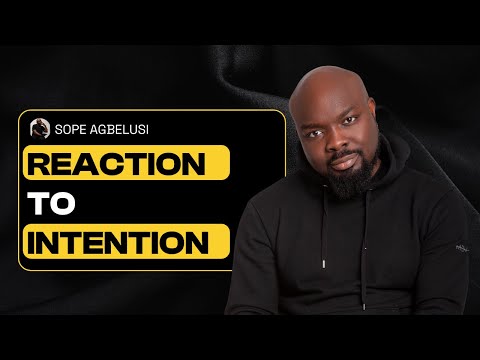
Decades later, Terrence is the advocate those boys never had: a solicitor bringing claims against the police for wrongful arrest, false imprisonment and malicious prosecution, a columnist for The Voice, and a man who calls out racist conduct while keeping the professional discipline his clients need. In this conversation with Sope Agbelusi, he talks about faith, empathy, and the day a client told him: you never told me you were a black man.
A pastor's kid from West Bromwich
Terrence is the youngest of four children of Jamaican Windrush-era parents; his father, a bishop, courted his mother by letter after moving to the UK around 1960. The household was strict Pentecostal: Sunday school, evening service, no arguments. Yet he describes his childhood on the streets of West Bromwich as one of the best periods of his life, spent with a block of Black boys who gravitated to each other without ever deciding to, a phenomenon he still turns over: when the chips were down, who was by your side?
The false vandalism accusation brought a lesson from the most influential teacher he ever had, Mr Gibbons, who took him aside and said: Terrence, in future, just don't get involved. Terrence was innocent, but the teacher had seen promise in him and was protecting it. Today, Terrence does get involved, professionally, as the Mr Gibbons for other people.
Empathy with professionalism
Asked whether he separates being a lawyer from being a Black man, Terrence says it is difficult and sometimes important not to. A client needs an advocate who will not become too emotionally involved, but does not want someone detached. His analogy is the oncologist: professional enough to do the job, human enough that bad news is never delivered coldly. He can tell clients truthfully that he too has been stopped, on suspicion of dealing drugs, for driving a luxury car in the wrong postcode; the stop was aborted the moment he spoke.
He code switches happily, including into Jamaican patois when it serves a client. In one claim against the Ministry of Defence, inherited with a strike-out application attached after the client's relationship with a big-name firm collapsed, his witness statement told the judge plainly that he speaks to his client in patois to get things through, and the application was defeated. The theme, he says, was simple: the client needed someone who could speak to him on that level. That is what representation means.
"You never told me you were a black man"
His defining story is from around 2001. After 18 months of phone calls and correspondence with an expert client, they finally met in person at counsel's chambers. The client looked over his newspaper, looked around him, looked through him. When Terrence introduced himself, the man jumped up, startled, and said verbatim: Terrence, you never told me you were a black man.
Terrence chose not to respond. He shook hands and went into the conference. His reasoning is a masterclass in choosing your battles. First, decide whether this is a battle you need to fight; not every battle deserves your armour. Second, his job was already done: the stereotype of what a lawyer looks like had been so spectacularly dismantled that the man could not stop himself saying it out loud. The client went on to invite him to lunch, to his choir concert, even to confide his marital problems. On the individual level: job done. On the systemic level, Terrence is clear the negative remains: if the general population believes a doctor or lawyer should look like a white man, we have a representation problem to root out.
The case for ending biased stop and search
Terrence's central demand is impartial, unbiased policing, and his evidence is the police's own statistics on disproportionate stop and search, records kept since the 1984 legislation \[CHECK: PACE 1984\]. He recalls the former Metropolitan Police commissioner telling the Home Affairs Select Committee, when asked about tens of thousands of stops of young Black men in London over three months in 2020, that she was "not alarmed, but alert".
He itemises the pretexts he sees in his cases: the claimed smell of cannabis, which he calls the most effective ruse precisely because it cannot be disproved; "you were paying too much attention to us"; "you're driving an expensive car, and expensive cars get stolen"; "your common name matched a disqualified driver". His forensic response: 99.9 per cent of expensive cars are not stolen and 99.9 per cent of John Smiths are not disqualified, so what made you think this one was? In one settled case, a young man he once drove to Sunday school was violently stopped and strip searched outside his own home; his mother recorded it, and after George Floyd's death in 2020 she insisted the wrong be righted. The case settled, though the apology has never come.
Stop and search matters, he argues, because it is the single greatest point of interaction between the police and the Black community, and the most traumatic tool used against it. He wants the cannabis pretext removed, a significant reduction in biased stops, and ultimately their elimination, while warning that current legislation risks watering down human rights and equality protections.
Staying sane in the fight
How does he hear these cases without being consumed by anger? Professionalism first, because a vexed lawyer is no good to his client. But professionalism does not mean coldness: it is important to express anger even as a professional, the way an oncologist is allowed to feel the weight of a diagnosis. Empathy mixed with professionalism, he says, is what the job requires.